
Three-phase farm shed solar systems
Almost every Irish farm installing 15 kWp to 62 kWp runs on a three-phase ESB supply. Three-phase inverters up to 11 kVA clear free NC6 notification, while 12 kVA to 50 kVA units run under ESB NC7 mini-generation (€1,041.81 incl. VAT) to feed balanced heavy motors.
Balancing solar power across all three phases for milking parlours, grain dryers and poultry fans without tripping breakers or wasting grid headroom.
Free, no obligation. One local installer prices it, not five.
- 11 kVA3-phase ESB NC6 free threshold
- 50 kVA3-phase ESB NC7 mini-generation ceiling
- 1.2–1.35xtypical DC panel-to-inverter ratio
- S.198DAFM electrical & Safe Electric spec
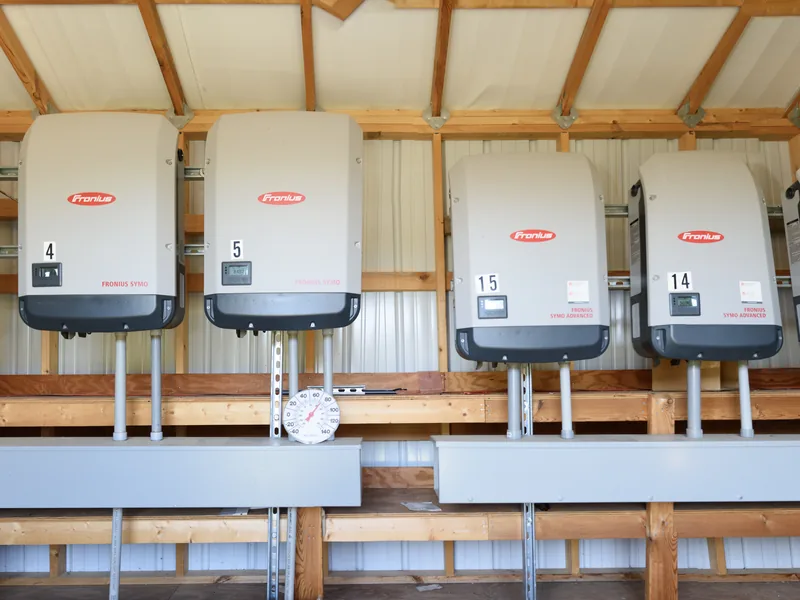
Why three-phase power supports 20 kWp to 62 kWp farm arrays
Heavy agricultural equipment, including rotary vacuum pumps, ice-bank milk coolers, continuous grain dryers and multi-fan poultry controllers, runs on three-phase 400 V power. Fitting a commercial three-phase solar inverter injects generation symmetrically across L1, L2 and L3 simultaneously, slashing import charges across all three phases rather than overloading a single phase.
Three-phase wiring also supports smart DC-to-AC oversizing. Even on an 11 kVA NC6 three-phase inverter, installers routinely wire 13 to 15 kWp of roof panels (split east-west where roofs allow) so overcast and shoulder-hour output stays high without crossing into the NC7 application queue. Above 15 kWp, moving cleanly onto an NC7 20 to 50 kVA three-phase inverter avoids summer midday clipping and captures full export credits.
Up to 11 kVA 3-phase
- ESB grid route
- ESB NC6 (free, 20 working days)
- Typical panel array (DC)
- 11–15 kWp (DC oversized)
- Best-fit Irish farm
- Beef yards, small dairy, workshops
12 to 30 kVA 3-phase
- ESB grid route
- ESB NC7 (€1,041.81 incl. VAT)
- Typical panel array (DC)
- 18–38 kWp
- Best-fit Irish farm
- 80–140 cow dairy parlours, grain stores
31 to 50 kVA 3-phase
- ESB grid route
- ESB NC7 (€1,041.81 incl. VAT)
- Typical panel array (DC)
- 40–62 kWp (max TAMS cap)
- Best-fit Irish farm
- Large dairy, pig units, broiler houses
Over 50 to 200 kVA
- ESB grid route
- ESB NC8 (G10 relay & study)
- Typical panel array (DC)
- 65–200 kWp (SEAI NDMG)
- Best-fit Irish farm
- Multi-house poultry & commercial agri plants
Price my farm solar
Four quick taps show your full ex-VAT cost and net cost after the 60% TAMS 3 grant before we ask for a phone number.
Dairy farm solar PV, 30 kWp array, with TAMS 3 60% grant: €11,200 to €15,600 net after 60% TAMS (full €28,000 to €39,000 ex-VAT).
How the farm solar figure is worked out
Guide ranges reflect typical Irish ex-VAT supply-and-fit agricultural PV rates (€1,000 to €1,400/kWp on sound steel shed roofs; €1,300 to €1,850/kWp ground-mounted) for panels, mounting rails, inverters, DC/AC cabling and DAFM S.198 commissioning. Net figures deduct the 60% TAMS 3 SCIS grant (paid on the lowest of actual ex-VAT invoice, proposed cost or DAFM reference cost up to €90,000). Optional battery storage (grant-aided up to 50% of solar kWp), ESB NC7 fee (€1,041.81 incl. VAT), purlin strengthening or asbestos roof replacement are priced after an on-farm survey. farmsolarpanels.ie is not DAFM, SEAI or a government body and does not award grants.
Sub-boards, earthing and G10 protection thresholds
Many Irish farmyards have grown over thirty years, with a milking parlour board, a grain store sub-board and a slatted-shed feed cable all branching off one main ESB meter cabinet. Electrical design decides reliability.
- Connect back to the main farm distribution board: tying a 30 kWp inverter into a lightly cabled remote shed sub-board causes AC voltage rise that trips the inverter on bright midday peaks.
- Confirm existing MIC (Maximum Import Capacity): your ESB electricity bill states your farm MIC in kVA; NC7 technical studies review local transformer headroom alongside your MIC.
- Safe Electric REC certification: DAFM S.198 requires complete AC/DC surge protection, lockable AC rotary isolators, clear farm-board labelling and an official Safe Electric Completion Certificate.
- Avoid accidental NC8 triggers: staying at or under 50 kVA AC inverter output keeps you inside NC7 mini-generation; stepping to 51 kVA moves the project into NC8 with expensive G10 protection relays and longer lead times.
See the full grid paperwork breakdown on ESB Networks NC6 vs NC7.
Related farm solar guides
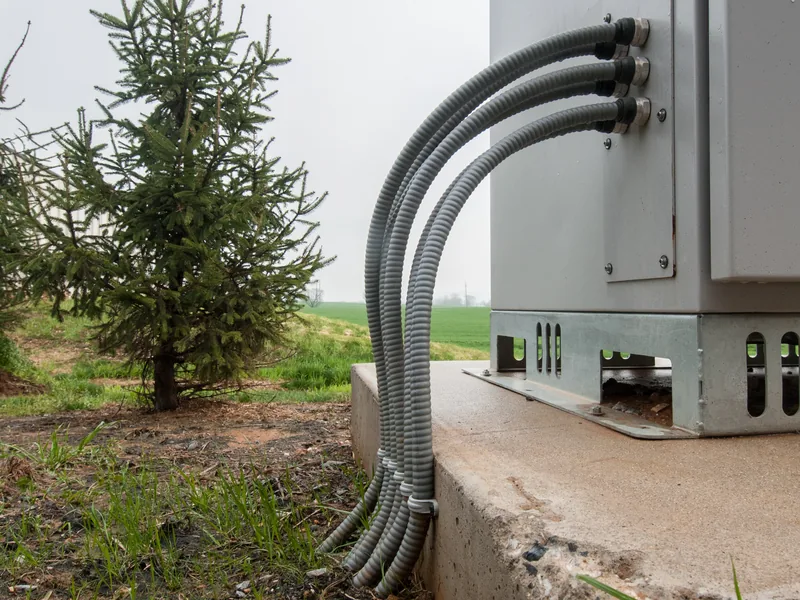 ESB NC6 vs NC7 grid rules6/11 kVA inform-and-fit vs 50 kVA Connection Offers and €1,041.81 fee.
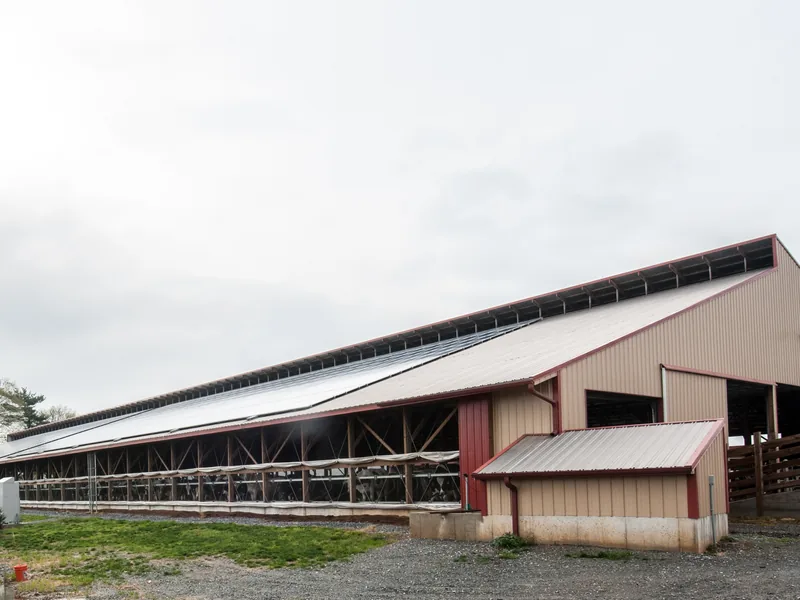 Dairy farm solarMilking parlour cooling, water heating and 20–50 kWp sizing.
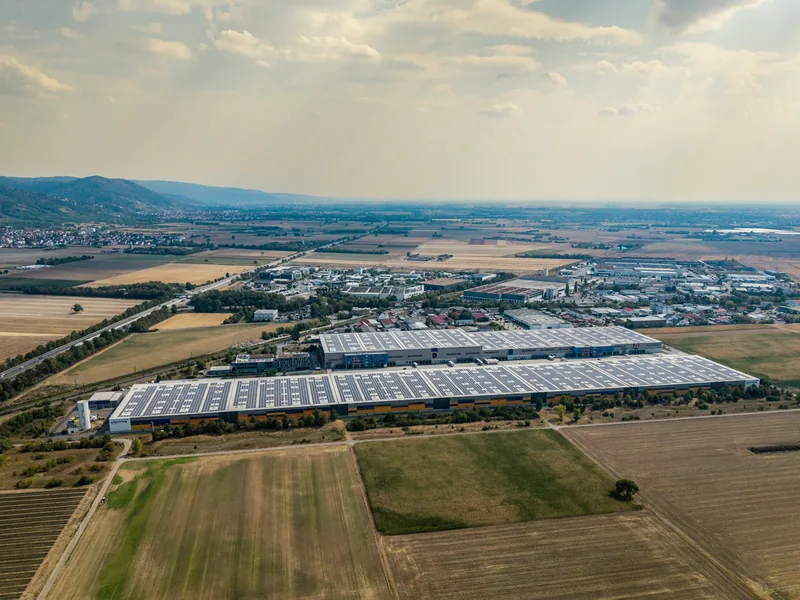 Poultry and pig unitsHigh continuous fan and feed loads delivering fast solar payback.
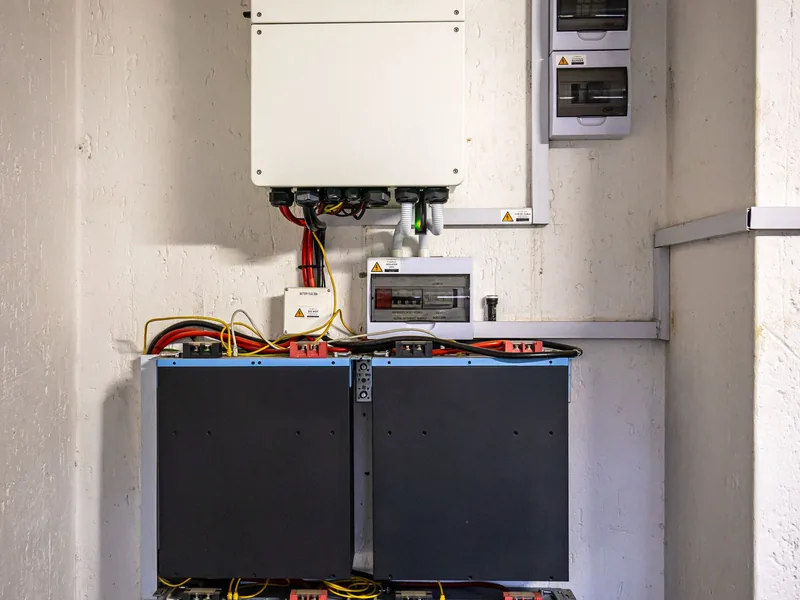 Farm battery storageTAMS 3 50%-of-kWp battery limits and milking peak shaving.
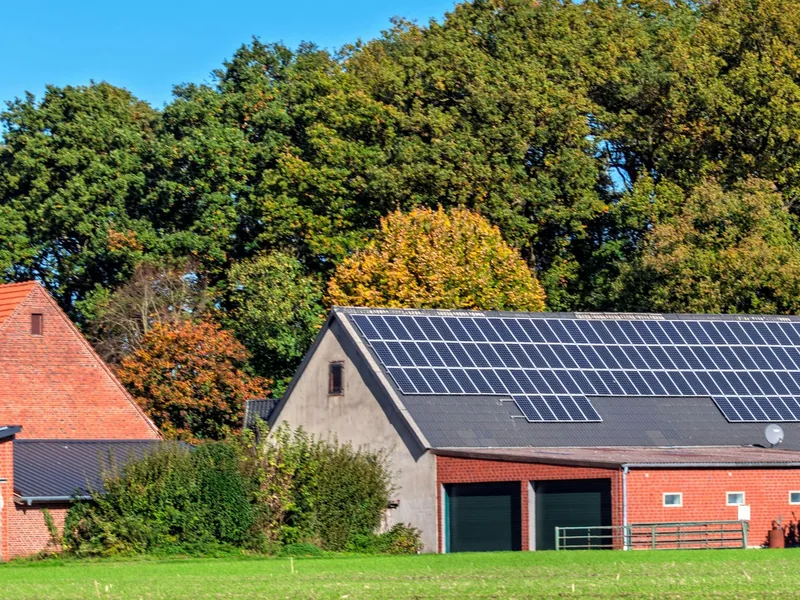 Farm solar cost by kWpFull 10–50 kWp ex-VAT prices before and after the 60% TAMS 3 grant.
 Comparing farm quotesTen technical lines every written agricultural solar quote should state.
Three-phase farm solar questions
What if my farm only has single-phase electricity right now?
Single-phase supplies allow up to 6 kVA under free NC6 (typically 7–8 kWp panels) or up to 17 kVA under NC7 (roughly 18–20 kWp panels). If your farm needs 30 to 50 kWp, ask ESB Networks to quote a three-phase supply upgrade early, as transformer upgrades can take several months.
Can I install multiple smaller three-phase inverters across two sheds?
Yes. Two 15 kVA inverters on separate sheds feed one combined 30 kVA AC total on your NC7 application, keeping DC string runs short and handling different roof orientations cleanly.
Does a 50 kWp panel array need a 50 kVA inverter?
Not always. Many Irish 50 kWp shed arrays use a 40 kVA or 45 kVA three-phase inverter, capturing near-full Irish output (peak noon irradiance rarely reaches full laboratory STC rating for long) while easing ESB local network limits.
Where should three-phase farm inverters be mounted?
Mount them upright on a fire-resistant wall inside a dry, ventilated switchroom or shaded exterior wall out of direct summer sun, clear of corrosive slurry gases and power-washer mist.
All farm solar pages and guides
Farm PV systems
Grants, grid & tax
Check three-phase sizing for your farm board
Run four quick taps in the planner and a single farm solar installer in your county will inspect your ESB supply and MIC on site.